The Fire Within the Ice: The Story Behind “Tição de Inverno”

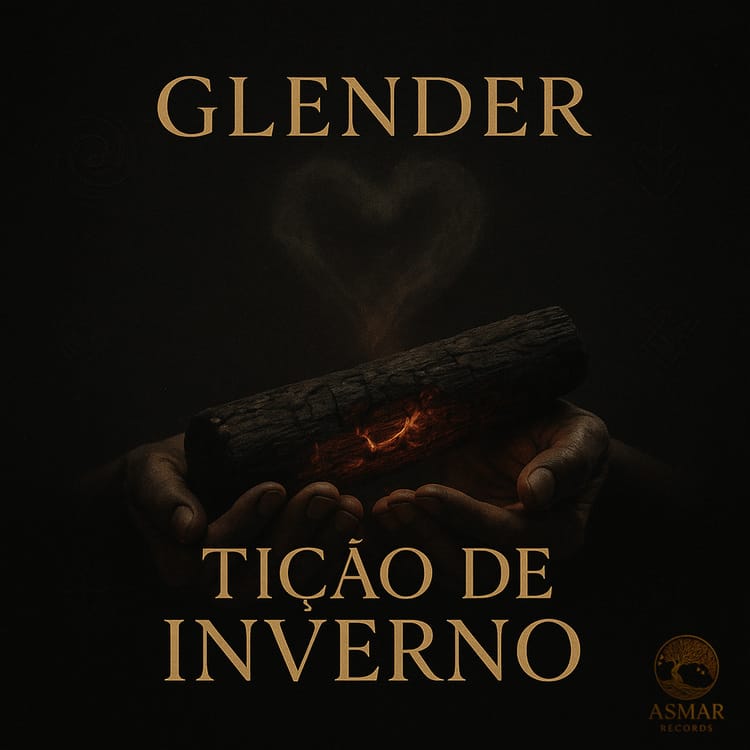
Tição de Inverno - Glender Afro House Track Artwork

The Fire Within the Ice: The Story Behind “Tição de Inverno”

Winter is not just a season. In the mountains of Portugal, winter is a character. It is a physical presence that shapes the landscape, freezes the rivers, and tests the endurance of the stone and the soil. But for every degree the temperature drops outside, there is a corresponding rise in warmth inside.

This contrast—the brutal cold of the world against the unshakeable heat of the human spirit—is the heartbeat of my latest release, “Tição de Inverno”.

As an artist, I have always been obsessed with the intersection of worlds. How do you blend the ancestral with the futuristic? How do you make a dance floor feel like a memory? With this track, I wanted to take listeners on a journey that begins in the frozen peaks of Trás-os-Montes and ends in the warm embrace of a memory that never fades.

This is the story of “Tição de Inverno.”

The Concept: What is a “Tição”?

To understand the music, you must first understand the title. In Portuguese, a Tição (ember or firebrand) is more than just a piece of burning wood. It is the log that sustains the fire. It is the piece of charcoal that holds the heat long after the flames have danced away. It glows red in the darkness, a silent guardian against the cold.

In the context of this song, the “Tição” is a metaphor for Resilience.

We live in a world that can feel incredibly cold—sometimes physically, often emotionally. We face aging, loss, and the relentless passage of time. The lyrics of the song speak to this duality:

“Bate o frio, bate a geada” (The cold beats down, the frost strikes)
“Mas a alma não arrefece” (But the soul does not grow cold)

I wanted to create an anthem for everyone who carries that inner fire. It is a tribute to the resilience of our grandparents, who lived through harder winters than we can imagine, yet kept their hearts soft and their doors open. It is about the “fire” of identity that remains burning even as our hair turns white.

The Sonic Landscape: Afro House Meets Melancholy

Musically, “Tição de Inverno” is a fusion of two very distinct energies.

On one side, we have the Afro House foundation. This genre is currently taking over the world for a reason: it is spiritual, grounding, and deeply rhythmic. I built the track around a driving, complex percussion section. The kick drum is deep—it hits you in the chest like a heartbeat. The shakers provide that constant, hypnotic motion that compels you to move. It represents the pulse of life that doesn’t stop, even in the dead of winter.

On the other side, we have the Portuguese Soul. This comes through in the melody and the instrumentation. I didn’t want this to be just another club track; I wanted it to bleed emotion.

The Role of the Flute

If you listen closely, the flute plays a crucial and solitary role. Sonically, it represents the wind. It calls across the valleys. It’s a piercing sound, yet one of pure beauty. It bridges the gap between the electronic synthesizers and the organic feel of the drums. It gives the track an ethereal and mysterious elegance, transforming it from a simple beat into a sophisticated composition, perfect for a moment of introspection or a journey into the night.

The Vocals: The Voice of “Saudade”

The vocal performance is the thread that ties everything together. The delivery is rhythmic, borrowing from the sensual sway of Kizomba and Zouk, but the tone is pure Saudade—that uniquely Portuguese feeling of longing and nostalgic love. When the vocalist sings “Vens do tempo dos avós” (You come from the time of the grandparents), it isn’t just a lyric; it’s a reverence for the past.

The Visual Journey: A Cinematic Experience

For the official music video, I knew that standard visuals wouldn’t be enough. The music is cinematic, so the video had to match that scale. Using advanced AI technology as a tool for artistic expression, I curated a visual narrative that mirrors the song’s emotional arc.

The video is structured as a battle between Blue (Cold) and Orange (Warmth).

1. The Wolf and the Storm

We open with the harshness of nature. We see the wolf howling on the jagged rock (“Fraga”), the blizzard blinding the view, and the ice accumulating on the branches. This establishes the adversary. It is the “Winter” of life. It is beautiful, but it is dangerous. It represents the challenges we face.

2. The Hearth

Then, we cut to the interior. The fire roaring in the stone fireplace. This is the visual representation of the “Tição.” The color palette shifts immediately from teals and greys to deep oranges and golds. It is a visual relief. You can almost feel the temperature rising on the screen.

3. My Grandmother

Perhaps the most powerful moment in the video — and the one that touches me deepest in my soul — is the appearance of the grandmother. For those watching from the outside, it’s an image of tenderness; but for me, it is everything.
That is my grandmother.

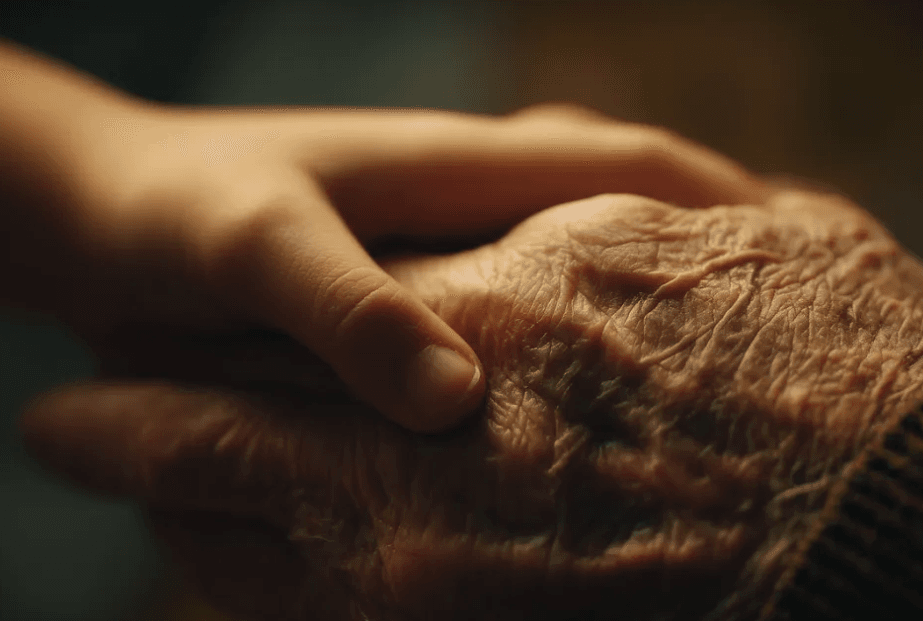
Although she is no longer physically with us, I wanted to use art and technology to offer her this eternal tribute. We see her there, her face mapped with the wrinkles of a full life, looking out at the snow. But then, the lighting shifts. The sun breaks through the clouds, and her face is bathed in golden light. She smiles.

This image perfectly captures the verse: “My hair has already turned white / But you are young in my heart.”
It is my way of saying that her light never went out. She is the true “Tição” of this story — the ember that continues to warm me, even after the winter of farewell.

4. The Thaw

As the track reaches its second drop—the climax—the visuals shift to the consequences of this warmth. We see the ice melting from the rocks. We see steam rising from the ground. We see the sun breaking through the storm clouds. It is the victory of the inner fire over the external circumstances. The landscape transforms from a frozen wasteland into a place of life and light.

Why This Track Matters Now

We are living in fast-paced times. Music is often consumed in 15-second clips, designed to be forgotten as quickly as it is heard. With “Tição de Inverno,” I wanted to slow things down.

I wanted to create something that invites you to sit with it. Whether you are dancing in a club or sitting alone by a window, this track asks you to look inward. It asks you: What is the flame that you are guarding? Who are the people who keep you warm?

This release is also a statement about the versatility of Portuguese Electronic Music. We have a rich heritage of folklore, Fado, and tradition. There is no reason why these elements cannot exist within the modern framework of House music. In fact, they belong there. Electronic music is about trance and connection, and what is more connecting than the stories of our ancestors?

Join the Circle

“Tição de Inverno” is now out in the world. It no longer belongs to me; it belongs to you.

I invite you to watch the official video on YouTube. Turn off the lights, put on your best headphones, and let the visual and sonic story wash over you.

If this track resonates with you, if it reminds you of home, or a loved one, or simply makes you feel a little warmer, please share it. 

Listen “Tição de Inverno” Here

Let’s keep the fire burning.

With gratitude,

Glender
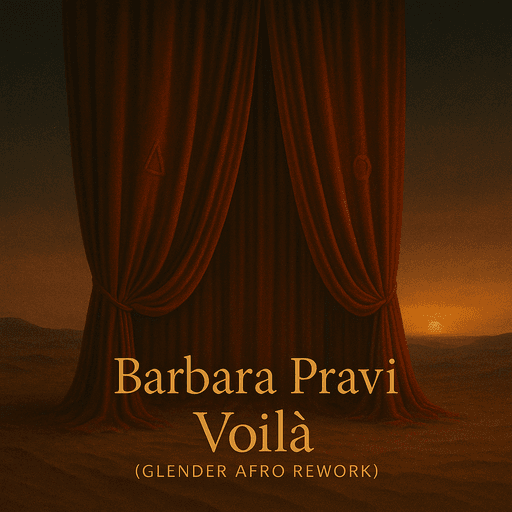
The Art of the Rework: Transforming Barbara Pravi’s “Voilà” into an Afro House Journey

Voilà - Glender Afro Rework - Barbara Pravi Cover Artwork

The Art of the Rework: Transforming Barbara Pravi’s “Voilà” into an Afro House Journey

Music, at its core, is a language of translation. It translates emotions into sound, experiences into melodies, and cultural moments into timeless memories. As a producer, my greatest passion lies not just in creating something new from scratch, but in taking something that already possesses a profound soul and translating it into a different sonic language.

This is the story behind my latest release: Barbara Pravi – Voilà (Glender Afro Rework).

It is a project that required more than just technical skill; it required a deep respect for the original masterpiece and a clear vision of how to transport a dramatic French ballad onto the sun-drenched dance floors of the Afro House scene.

The Source Material: Why “Voilà”?

To understand this rework, we must first appreciate the weight of the original song. When Barbara Pravi released “Voilà,” it wasn’t just a Eurovision entry; it was a cultural phenomenon. It revived the spirit of the great French Chanson, echoing legends like Edith Piaf and Jacques Brel.

The lyrics are a desperate, beautiful plea for connection. “Regardez-moi” (Look at me), “Écoutez-moi” (Listen to me). It is the sound of an artist stripping away all pretenses and standing naked before the audience, asking simply to be loved for who they are.

Musically, the original is theatrical. It creates a waltz-like atmosphere that feels intimate, almost like a small cabaret in Paris. It relies on varying tempos, dramatic pauses, and a crescendo that explodes with vocal power.

For a producer, this is both a dream and a nightmare. It is a dream because the raw material—the vocal—is perfect. It is a nightmare because the structure is the antithesis of electronic dance music. Dance music requires a steady pulse, a grid, a 4/4 time signature. “Voilà” flows like water; it speeds up and slows down with the singer’s heartbeat.

The Concept: A Clash of Cultures

My vision for the Glender Afro Rework was born from a question: What happens if we take this Parisian drama and place it in the middle of a vast, open landscape?

I wanted to strip away the cabaret walls and let the vocal breathe in the open air. I imagined the sun setting over a desert or a beach in Comporta or Tulum. I wanted to replace the orchestral strings with the earthy, grounding rhythms of Afro House.

Afro House and Organic House are genres that, much like the Blues or Fado, are rooted in feeling. They aren’t just about making people jump; they are about trance, hypnosis, and spiritual connection. By marrying the desperate emotion of Pravi’s vocals with the spiritual depth of African percussion, I aimed to create a track that serves a dual purpose: it is music for the body, but it is also music for the soul.

The Production Process: Bridging the Gap

Transforming a ballad into a club track is a delicate surgery. If you do too much, you lose the emotion. If you do too little, it sounds like a cheap overlay. Here is a look into my production process for this track.

1. Taming the Rhythm

The first challenge was the time signature. The original track has a sway that doesn’t naturally fit the strict 4/4 beat of House music. I had to meticulously warp and align the vocals, ensuring they sat perfectly on the grid without losing their natural, human feel. I didn’t want the vocals to sound robotic; they needed to float above the beat, maintaining that push-and-pull tension that makes the performance so gripping.

2. The Foundation: The Kick and Bass

In Afro House, the kick drum is the heartbeat. For this rework, I chose a kick that is soft, round, and deep. I avoided the punchy, aggressive kicks found in Tech House. This kick is meant to be felt in the chest rather than heard in the ears.

The bassline follows suit. It is a rolling, sub-bass groove that provides a warm blanket for the rest of the track. It doesn’t fight for attention; it anchors the song, giving the listener a sense of stability while the vocals soar into the higher registers.

3. Organic Textures

This is where the “Glender” signature comes in. To counter the electronic nature of the synthesizer, I layered the track with organic percussion. You will hear crisp shakers, wooden blocks, and subtle tribal drum hits. These elements provide the “dirt” and the texture. They make the track feel alive, as if it were being played by a band around a fire rather than programmed on a computer.

4. The “Drop” Philosophy

In mainstream EDM, the “drop” is usually a moment of maximum noise and energy. In Deep and Afro House, the drop is often a moment of release and minimalism.

When Barbara Pravi screams her iconic “Et Voilà!”, I made the conscious decision not to overwhelm her. Instead, I let the music open up. The beat locks in, the bass rolls deeper, and atmospheric pads swell in the background. It is a moment of pure vibe. It allows the listener to close their eyes and get lost in the rhythm, carrying the emotion of the scream into the dance.

Sophisticated Melancholy: The Vibe

There is a specific term in Portuguese culture that defines much of my inspiration: Saudade. It is a nostalgic longing, a happiness that is tinged with sadness. I believe this rework captures that feeling perfectly.

This is not a track for peak-hour festival madness with pyrotechnics. This is a track for the Golden Hour. It is designed for that magical time of day when the sun dips below the horizon, the air cools down, and the night begins.

I imagine this track being played in beach clubs in Mykonos, in desert camps in Morocco, or on a long, solitary drive along the coast of Portugal. It is sophisticated music. It respects the intelligence and emotional depth of the listener. It demands patience, and it rewards it with a journey.

Why a “Rework” and not just a Remix?

You might notice I label this a “Rework” rather than a standard remix. This distinction is important to me. A remix often implies using the original stems provided by the artist to create a variation. A rework, in the culture of underground electronic music, often implies a more bootleg, unauthorized, or completely transformative approach where the producer rebuilds the track from the ground up, often using only the vocal as the reference point.

It is an homage. It is my way of saying to the original artist: “You created something beautiful, and I love it so much that I want to show it to my world, in my language.”

The Final Result

The feedback I have received on this track has been overwhelming. It seems that the fusion of French passion and African rhythm resonates with people across borders. It proves that great music has no genre. A great melody is a great melody, whether it is played on an accordion in Paris or a synthesizer in a studio in Portugal.

I invited you to listen to “Voilà (Glender Afro Rework)” not just as a dance track, but as a piece of musical storytelling. Listen to how the percussion interacts with the breath of the vocals. Feel how the bassline supports the high notes.

This project was a labor of love, a technical challenge, and an artistic statement. I am proud to share it with you.

Experience the Track

You can listen to the full track on my YouTube channel, where I have curated a visualizer that matches the desert-sunset aesthetic of the sound.

And because I believe music should be shared and owned by those who love it, I am offering a Free High-Quality Download of this rework for my community. Add it to your DJ sets, your driving playlists, or your relaxation rotation.

Download the Track Here

Thank you for listening, supporting, and understanding the soul behind the beat.

Glender

Behind the Beat: The Story of “Roncos Do Diabo – Baile Das Oliveiras (Glender Mix)”

Baile das Oliveiras - Glender Club Mix Artwork

Behind the Beat: The Story of “Roncos Do Diabo – Baile Das Oliveiras (Glender Mix)”

It all started with a question that echoed in my mind, much like the hypnotic beat that drives this track: What if the ancestral rhythm of a Portuguese tradition could dance with the modern pulse of Afro House?

Today, I’m so excited to share the story behind my latest release, “Roncos Do Diabo – Baile Das Oliveiras (Glender Mix).” This project is more than just a song; it’s a piece of my soul, a bridge between the world I come from and the music I love to create.

Finding the Soul in Tradition: The Roots of the Track

The journey began with the haunting sounds of “Roncos Do Diabo,” a name that evokes a raw, almost mystical power rooted in Portuguese folklore. I was drawn to the spirit of Trás-os-Montes, a region in Northern Portugal known for its stark beauty, ancient traditions, and resilient people. The “Baile das Oliveiras” (The Dance of the Olive Trees) is a real, ancestral ritual—the olive harvest. It’s a dance of hard work, community, and connection to the land.

I wanted to capture that feeling—not just the sound, but the soul of it. The weight of history, the smell of the cold earth, the warmth of shared bread after a long day’s work. This wasn’t about simply sampling a folk song; it was about channeling its spirit.

Building the Bridge: From Trás-os-Montes to the Dance Floor

The challenge was clear: how do you honor something so sacred while making it move a modern dance floor? The answer, for me, was Afro House.

The genre’s deep, organic, and tribal rhythms felt like a natural cousin to the primal pulse of Portuguese traditions. I built the track around a driving, hypnotic beat that could carry the listener. The main melody, played on a synth that evokes a Kalimba, was designed to be the thread connecting these two worlds—it’s both ancient and futuristic.

My goal with the Glender Mix was to create a soundscape where the kick drum feels like a heartbeat, and the melody feels like a memory you can’t quite place, but that warms your soul.

Experience the Journey Yourself

This track is my tribute to the idea that our roots are not a museum piece. They are a living, breathing force that can dance with the future. It’s a celebration of Portuguese culture, but its message is universal: our heritage is our strength.

I am incredibly proud to share the full experience with you. Watch the official video, feel the energy, and as a thank you for your support, download the track for free.

[Watch the Official Music Video on YouTube]

And for being part of this journey, here is your exclusive free download of the track.

Download “Baile Das Oliveiras (Glender Mix)” Here


Thank you for listening, for watching, and for feeling. Let me know in the comments what this journey made you feel.

With gratitude,
Glender

The Song Born from Stone: The Journey of “Canto de Xisto”

canto de xisto

The Song Born from Stone: The Journey of “Canto de Xisto”

Where are songs born?

It’s a question I constantly ask myself as an artist. Songs can be born from love, from loss, from a sudden joy, or from a sleepless night. But “Canto de Xisto” wasn’t born from any of those things. It was born from the ground I walk on, the air I breathe, and the heavy, wise silence of a land that shaped me: Trás-os-Montes.

This song, and the video that accompanies it, are not just a project. They are a homecoming. An attempt to translate into sound and image the complex soul of a place that is, at once, one of the harshest and most beautiful in the world. Today, I want to open the doors to this journey and tell you the story behind the song.

The Sound of a Land: How Do You Set Silence and Resilience to Music?

The initial idea wasn’t to write a song about Trás-os-Montes. It was to try and answer a deeper question: “What is the sound of this land?” Trás-os-Montes is defined by dualities. It is the land of “nine months of winter and three months of hell,” where the “sun burns the rock and the winter punishes.” It is the land of the deep silence of the mountains, but also of the stories shared around the warmth of the hearth.

How could this be turned into music? My first decision was to step away from the obvious. Instead of relying solely on traditional folk instrumentation, I felt that the true essence of Trás-os-Montes today is resilience. It is a constant pulse, an unyielding strength. And for me, the best way to represent that tirelessly beating heart was through a hypnotic, deep electronic beat. The beat in “Canto de Xisto” isn’t a dance beat; it’s the sound of steady footsteps on the earth, the rhythm of unending work, the pulse of life that insists on blooming against all odds.

Upon this modern foundation, the voice and the melody had to be the ancestral soul. They had to carry the weight of saudade, the melancholy of the “ancient sorrow” that the shepherd carries with him, but also the tenderness and strength of the community. The voice is the “canto” (the song), and the beat is the “xisto” (the schist rock)—one is born from the other, the organic emerges from the solid.

The Vision: Painting Memories with Light and Artificial Intelligence

When I started thinking about the video, I knew I didn’t want a traditional music video. I wanted a visual poem. I wanted every image to be a verse, a painting that would deepen the meaning of the lyrics.

Some of these images were clear in my mind: me, atop the mountains, feeling the vastness; the shepherd guiding his flock at sunset. But how do you film a feeling? How do you capture a memory?

This is where I made one of the most important decisions of the project: to use artificial intelligence (Midjourney) not as a substitute for reality, but as a tool to access a collective dream. I used AI as a brush to paint memories that we all share but that no one ever photographed. The close-up of an elder’s eye that holds centuries of stories; the hands kneading bread as a symbol of sustenance; the children running as the promise of the future—these are not images of specific people, they are archetypes of the transmontana soul.

The fusion of these generated images, which feel like they’ve emerged from a dream, with my own real footage, created the visual texture I was looking for: a constant dialogue between the real and the symbolic, between the present and the eternal. The color grading, with its warm, earthy tones, was the final stitch, ensuring everything belonged to the same universe, to the same golden, melancholic light.

The Lyrics: A Map of Sensations

Every word in “Canto de Xisto” was chosen with the precision of someone describing their own home. The lyrics are a sensory journey:

  • “Ó montes, meus montes, de xisto e de pão” (Oh mountains, my mountains, of schist and of bread): Geology and sustenance. The foundation of everything.

  • “Na aldeia pequena cai a noite escura, cheira a fumo de lenha, à sopa que apura” (In the small village the dark night falls, smelling of firewood smoke, of the simmering soup): The comfort of home, the scent that welcomes us and tells us we are safe.

  • “O som do chocalho, que o tempo não cala, é a voz desta terra que chora e que fala” (The sound of the cowbell, which time cannot silence, is the voice of this land that weeps and that speaks): The region’s soundtrack, transformed into a metaphor for its own voice—a voice that expresses both its sorrow and its stubborn, continuous existence.

And, of course, the two verses that are the heart of the entire song. “Terra de silêncio, de vento e de fé” (Land of silence, of wind and of faith) is the definition of the place’s soul. The silence of the vastness, the wind that shapes the landscape and its people, and the faith—not just religious, but faith in the land, in the community, and in the ability to endure.

To this, the promise responds: “Trás-os-Montes, meu berço, hei-de ter-te de pé.” (Trás-os-Montes, my cradle, I will keep you standing.). It’s more than a play on words. It is a pact. A commitment to honor one’s origins and to fight so that this identity, this culture, and this strength are never lost.

A Song for the World

In the end, “Canto de Xisto” became more than I had imagined. It is a love letter to my homeland, yes, but I hope it is also a window for those who do not know it. I hope that by listening to the music and watching the video, you feel what I feel: that even in the most silent and forgotten places, there is an immense beauty and a strength that can inspire us all.

This is my song. But now, it is also yours. Thank you for listening.

With all my soul,
Glender

Crafting the Cosmos: The Sound of Hakuna Mumwe

The Sound of Hakuna Mumwe

Crafting the Cosmos: The Sound of Hakuna Mumwe

Hello tribe,

Introduction: A Ritual in Sound

Every piece of music is a journey. Some tracks are made for the dancefloor, others for the radio, and some are born to live in memory — carried like chants that echo long after silence has fallen. Hakuna Mumwe is one of those tracks.

When I set out to create this piece, the intention was not just to compose music but to sculpt an atmosphere — a sonic ritual. A journey that takes the listener from the raw earth of ancestral drums to the infinite expanse of the cosmos. The response has been overwhelming. Many of you described how the visuals and sound merged into something greater than the sum of their parts. For me, that is the essence of what music should be: not just heard, but remembered.

The Vision: Ancestral Futurism

At the heart of Hakuna Mumwe lies a guiding principle I often return to: Ancestral Futurism. It is the idea of honoring ancient roots while projecting sound into the vast unknown of tomorrow.

Imagine a drumbeat echoing through the desert night, flames rising, bodies moving in rhythm. Now imagine those same rhythms floating among constellations, bending with the light of distant galaxies. This duality — earth and sky, tradition and innovation, soil and starlight — is what shapes my sound.

When I look at music, I don’t just see notes or beats. I see symbols. Every element is a glyph, a marker, a signpost guiding us through a map of memory. With Hakuna Mumwe, the map was clear: connect the terrestrial with the celestial.

The Call of the Voice

The soul of the track comes through the vocals. A voice that is both human and more-than-human. A call that feels like it has been sung for centuries — though you are hearing it for the first time.

When you hear it, it is not simply a melody. It is an invocation. The kind of voice that resonates in the chest and bones, not just the ears. It is the whisper of ancestors, the echo of a forgotten ceremony, the sound of belonging to something larger than yourself.

The choice to make the vocals central was deliberate. In tribal traditions, the voice carries both message and medicine. It tells stories, it transmits memory, it holds communities together. In Hakuna Mumwe, the voice is the fire around which all other elements gather.

The Pulse of the Earth

Instead of a rigid beat designed to push the body into movement, the rhythm of Hakuna Mumwe is a pulse. It feels alive, breathing, moving with you rather than against you.

It is the sound of footsteps on sand, of drums played at twilight, of hands striking stretched skins in circles that could last for hours. This rhythm doesn’t command you; it invites you. It grounds you, reminding you that no matter how far into the cosmos your mind may travel, you are always connected to the earth beneath your feet.

This pulse is what binds the track together. It’s not aggressive. It’s steady, patient, eternal. Like the heartbeat of the planet itself.

Atmospheres: The Infinite Above

If the pulse grounds you, the atmosphere sets you free.

In Hakuna Mumwe, layers of textures rise like morning mist and expand like night skies. There are moments when the sound feels like golden energy unfolding — a direct reflection of the visuals many of you experienced. Other times, the sound dissolves into whispers, trails of light, sonic dust that floats weightlessly.

These atmospheres are not meant to be analyzed; they are meant to be felt. They represent the cosmos inside us all — the vastness of thought, the infinity of memory, the uncharted dimensions of the spirit.

Listening with your eyes closed, you may feel surrounded by space, as if standing in a desert at night where the horizon is infinite and the stars are close enough to touch.

Ritual and Memory

To me, Hakuna Mumwe is not just a song; it is a memory made sound.

Every glyph, every symbol, every beat in my work carries the intention of connecting past and future. Tribal traditions remind us that memory is not linear — it is cyclical. We do not just remember the past; we re-live it through ritual, through song, through dance.

When listeners tell me they feel something “ancient” in this music, it means the intention has been fulfilled. Because that ancient feeling is not nostalgia; it is recognition. You are not listening — you are remembering.

Beyond the Studio: Music as Ceremony

Music is often seen as entertainment, but for me, it has always been closer to ceremony.

Think of how our ancestors used rhythm: to call rain, to celebrate harvest, to mark passages of life and death. Every sound was sacred. Every gathering around drums or songs was a ritual of unity.

In the modern world, we may have traded campfires for clubs, but the spirit remains. When we gather to dance, to listen, to lose ourselves in rhythm, we are participating in a ritual older than written history. Hakuna Mumwe is my offering to that eternal circle.

Symbols and Spiritual Mapping

Within the Glender identity, symbols are everything. Spirals, triangles with arrows, glowing glyphs — they are not decorations but maps.

Hakuna Mumwe carries this philosophy into sound. The track is full of invisible symbols: the rising voice is a spiral ascending, the grounding pulse is a triangle rooted in the earth, the shimmering atmosphere is the arrow pointing toward infinity.

Each listen is like tracing these shapes in your mind, following a path that leads both inward and outward. The sound is a compass, and the ritual is the journey.

The Listener’s Experience

What matters most is not my process but your experience. Music is a bridge, and once it reaches you, it belongs to you.

Some listeners wrote to me describing the track as cosmic meditation. Others said it felt like a soundtrack for journeys — both physical and spiritual. A few described it as music for the soul, something that connected them to parts of themselves they didn’t usually access.

That diversity of interpretation is exactly the point. A ritual speaks differently to each participant. Hakuna Mumwe does not dictate what you should feel — it opens a space for you to feel what you need.

The Cultural Context

Afro-house and tribal house are not just genres — they are continuations of a lineage that goes back centuries. They are living traditions, carrying the essence of drumming circles, ceremonies, and sacred gatherings.

By placing these sounds in a modern, electronic frame, I am not replacing their origin but amplifying it, projecting it into the future where new generations can connect with it. This is what I mean by Ancestral Futurism: honoring the origin while embracing the infinite possibilities of tomorrow.

Closing the Circle

In the end, Hakuna Mumwe is more than a track. It is a circle — a ritual in sound, a memory carried forward, a reminder of who we are and where we come from.

When you press play, you are not just consuming music. You are stepping into ceremony. You are connecting with voices that have been calling for centuries. You are remembering your wild nature, your infinite essence, your place in the great dance of existence.

So I ask you again:
When you listen, which element speaks to you most? The voice that calls, the pulse that grounds, or the atmosphere that lifts you into the stars?

Final Words

Music, at its highest form, is not about perfection. It is about connection. It is about bringing people together, across borders, across time, across the visible and invisible.

Hakuna Mumwe is my offering to that vision. My wish is that every time you listen, you feel closer to yourself, to your ancestors, and to the cosmos.

This is not just music. This is memory made sound.

Stay awakened. Stay connected.
GLENDER

The Journey Behind “The Weight of Light”

The Weight of Light

The Journey Behind “The Weight of Light”

Discover the creative process and emotional depth behind my latest deep house release that bridges the gap between dance floor energy and introspective listening.

Introduction

“The Weight of Light” emerged from my desire to explore the duality of electronic music – how it can simultaneously uplift and provoke deep reflection. This track represents a significant milestone in my artistic journey, combining technical precision with emotional storytelling.

Track Breakdown

The song’s foundation builds on a carefully crafted deep house rhythm, where the bassline serves as the track’s backbone. The synth-driven melodies weave through the composition, creating layers of atmospheric texture that evolve throughout the piece. Strategic vocal elements add an extra dimension of emotional resonance, making the track both danceable and deeply moving.

Behind the Scenes

Inspiration and Concept

The concept behind “The Weight of Light” came from observing how moments of joy often carry an underlying current of melancholy. I wanted to capture this complex emotional landscape in musical form, using the interplay between rhythmic energy and atmospheric soundscapes to tell this story.

Creative Process

The production process involved careful attention to balancing elements. Each layer was crafted to serve both the track’s dance floor appeal and its more contemplative aspects. The challenge was maintaining this delicate equilibrium while ensuring the track remained engaging and dynamic.

Sound Design

The track’s signature sound comes from a blend of analog-inspired synthesizers and carefully processed acoustic elements. The goal was to create a warm, organic feeling within the electronic framework, allowing the music to feel both modern and timeless.

Conclusion

“The Weight of Light” represents my commitment to creating electronic music that goes beyond the conventional boundaries of dance music. It’s an invitation to both move and reflect, to experience the full spectrum of emotions through sound.

Listen now on all major streaming platforms. Check out more of my music on Beatport.

The Heartbeat of Glender: A Musical Journey Through the World’s Ethnic Rhythms

The Heartbeat of Glender

The Heartbeat of Glender: A Musical Journey Through the World’s Ethnic Rhythms

Hello, dear readers,

Today, I invite you to embark on an intimate journey with me, a journey that traverses continents, cultures, and centuries through the universal language of music. My name is António Tavares aka Glender, and my musical style is a heartfelt fusion of ethnic sounds from around the globe. This post isn’t just about the technical aspects of my music—it’s about the emotions, the stories, and the soul behind every beat and melody.

Rhythms from Childhood

My love for rhythms began in the most humble of places—my mother’s kitchen. As a child, I would grab her pots, pans, and buckets to create makeshift drums, much to her chagrin. These everyday objects became my first instruments, allowing me to explore and express the rhythms that seemed to flow naturally through me.

A Voyage Begins: My Navy Experience

Years later, my journey into the world of music was profoundly shaped by my time in the Portuguese Navy. Serving in the navy gave me the unique opportunity to travel to various countries, immersing myself in their cultures and, most importantly, their music.

The Rhythms of Africa

During my navy days, we docked in numerous African ports. The powerful beats of African drums captivated me instantly. These rhythms resonated through my entire being, awakening something primal and profound within me. It was as if the drums spoke a language that my soul instantly understood.

The Soul of the Oud in the Middle East

Our travels took us to the heart of the Middle East, where I encountered the oud. The first note played by a master musician brought tears to my eyes. The oud’s hauntingly beautiful melodies seemed to carry the weight of ancient stories and deep, unspoken emotions.

Each string plucked felt like a thread connecting me to generations past, to people I had never met but whose emotions and experiences I could feel through the music.

The Melodies of Asia

The navy also took me to various Asian countries, where I discovered instruments like the Chinese guzheng and the Japanese taiko drums. The guzheng’s serene, flowing notes felt like a gentle stream, soothing and calming my spirit. In contrast, the taiko drums were a powerful force, their rhythms echoing the heartbeat of the earth itself.

Crafting My Unique Sound

Blending these diverse sounds into my music wasn’t just about combining different instruments; it was about merging emotions and stories. Every beat, every melody in my music is a tribute to the cultures and people who have shared their musical heritage with me.

I spent countless hours in my studio, surrounded by these instruments, experimenting with different combinations and seeking harmony.

The Emotional Core

Music is more than notes and rhythms—it’s a vessel for emotions. When I create, I pour my heart into every piece. I want my listeners to feel the joy, sorrow, love, and longing that I experience through these sounds.

Stories Through Music

Each song I compose is a story, a bridge between cultures. It’s my way of honoring the traditions that have shaped me and sharing them with the world. My hope is that through my music, listeners will feel connected to something larger than themselves—a global community bound by the shared language of music.

Conclusion

Thank you for joining me on this emotional journey through the heart of my music. I hope my story and the stories of the cultures I draw from resonate with you as deeply as they do with me.

The Story Behind My Latest EP: Roots

roots

The Story Behind My Latest EP: Roots

Discover the inspiration and creative process behind “Roots,” my latest EP featuring three Afro house tracks: “Safari Pulse,” “Cosmic Soul,” and “Percussive Paradise.”

Introduction

Creating “Roots” was an exploration of Afro house music deeply intertwined with my cultural heritage and musical evolution. This EP is a blend of traditional African sounds with contemporary house music, designed to take listeners on a rhythmic and melodic journey.

Track Breakdown

Safari Pulse

“Safari Pulse” is the heartbeat of the EP, showcasing the roots of Afro house. The track features a captivating flute melody intertwined with an African chant that brings a sense of spiritual grounding. The use of traditional instruments creates an authentic soundscape that pays homage to the rich musical traditions of Africa.

Cosmic Soul

In “Cosmic Soul,” I blend Afro house with progressive house influences. This track features a beautiful ethnic chant and a catchy piano melody, layered over a groovy beat. The combination of these elements creates a cosmic journey through sound, reflecting the unity of different musical genres and cultures.

Percussive Paradise

“Percussive Paradise” is a rhythmic journey through African drum grooves. This track emphasizes percussion, providing a raw and energetic vibe that is both uplifting and grounding. It’s a celebration of the dynamic rhythms that are at the core of Afro house music.

Behind the Scenes

Inspiration and Concept

The concept of “Roots” was inspired by my desire to reconnect with my heritage and to explore the depths of Afro house music. Each track tells a part of this story, from the spiritual undertones of “Safari Pulse” to the genre-blending “Cosmic Soul,” and the rhythm-heavy “Percussive Paradise.”

Creative Process

Creating this EP was a journey in itself. I started by collecting traditional African sounds and instruments, which I then blended with modern house music elements. This process involved a lot of experimentation and collaboration with other musicians who share a passion for Afro house.

Conclusion

Thank you for joining me on this journey through “Roots.” This EP is a reflection of my musical heritage and creative evolution. Stay tuned for more updates and behind-the-scenes content.

Listen and buy the Roots EP here

Preparing for a Live DJ Set: Tips and Tricks

Preparing for a Live DJ Set

Preparing for a Live DJ Set: Tips and Tricks

Quick Tips for Busy Readers:

  1. Do Your Homework: Research the venue and know your equipment.
  2. Prepare Your Set: Create multiple playlists and practice transitions.
  3. Check Your Gear: Ensure everything works and have backups ready.
  4. Arrive Early: Set up and perform a soundcheck well before your set.

Introduction:

Preparing for a live DJ set can be daunting, especially if you’re new to the scene. But with careful planning and practice, you can deliver an unforgettable performance. Here’s a detailed guide to help you prepare like a pro.

1. Do Your Venue Homework:

Before your gig, gather information about the venue. Understand the sound system, the layout of the DJ booth, and the type of crowd you will be playing for. Knowing these details can help you tailor your set to fit the environment and engage your audience more effectively.

2. Gather Your Tunes and Practice:

Select a diverse range of tracks that you are comfortable mixing. It’s essential to have more music than you think you’ll need, allowing flexibility during your set. Spend time practicing your transitions to ensure they are smooth and seamless.

3. Gear Check and Backup:

Create a checklist of all the gear you need, including headphones, cables, adapters, and USB drives. Ensure your USBs are loaded with the correct tracks and that you have backups. Test all your equipment before heading to the venue to avoid any last-minute surprises.

4. Arrive Early and Soundcheck:

Arriving early allows you to set up calmly and perform a thorough soundcheck. This step is crucial for identifying and resolving any technical issues beforehand. Use this time to get familiar with the equipment and the acoustics of the venue.

5. Plan for the Unexpected:

Always have a plan B. Whether it’s a backup USB, extra cables, or an alternate playlist, being prepared for technical difficulties can save your set. Familiarize yourself with basic troubleshooting for common issues.

6. Manage Pre-Show Jitters:

It’s normal to feel nervous before a gig. Take some time to relax and listen to different music genres to clear your mind. Engage in a pre-show ritual that helps calm your nerves and puts you in the right mindset for your performance.

7. Engage with Your Audience:

Reading the crowd is a vital skill for any DJ. Pay attention to their reactions and adjust your set accordingly. Building a connection with your audience can elevate your performance and make the night memorable.

8. Post-Gig Reflection:

After your set, take time to reflect on what went well and what could be improved. Listen to any recordings of your performance to identify areas for growth. Sharing your experience on social media can also help build your brand and engage with your audience.

How I Got Signed to a Record Label: 10 Steps to Achieve Your Music Dream

How I Got Signed to a Record Label

How I Got Signed to a Record Label: 10 Steps to Achieve Your Music Dream

For the Busy Reader:

  1. Develop Your Unique Sound
  2. Build a Strong Online Presence
  3. Network Within the Music Industry
  4. Create a Professional Demo
  5. Perform Live as Much as Possible
  6. Research Potential Record Labels
  7. Submit Your Demo Strategically
  8. Follow Up Professionally
  9. Leverage Social Proof
  10. Stay Persistent and Adaptable

Introduction

Getting signed to a record label is a dream for many musicians. It can provide the resources, connections, and credibility needed to take your music career to the next level. In this post, I’ll share my personal journey and actionable steps to help you navigate this complex process.

1. Develop Your Unique Sound

Your music needs to stand out in a crowded industry. Spend time refining your style and sound until it’s distinct and uniquely yours.

Tip: Study various genres and artists, and incorporate different elements to create something new.

2. Build a Strong Online Presence

An online presence is crucial. This includes social media profiles, a website, and streaming platforms. Engage with your audience regularly.

Tip: Post regularly and interact with fans. Share behind-the-scenes content, live performances, and personal stories.

3. Network Within the Music Industry

Connections are key. Attend industry events, join music associations, and network with other artists, producers, and industry professionals.

Tip: Join online music forums and groups. Attend local gigs and industry meetups.

4. Create a Professional Demo

A polished demo is essential. Ensure it highlights your best work and is professionally produced.

Tip: Invest in quality recording equipment or consider working with a professional studio.

5. Perform Live as Much as Possible

Live performances can attract attention from scouts and label reps. They also help build your fanbase.

Tip: Record your live performances and share them online.

6. Research Potential Record Labels

Not all labels will be a good fit. Research to find ones that align with your music style and goals.

Tip: Check out the artists they’ve signed and see if their roster feels like a good fit for your music.

7. Submit Your Demo Strategically

Follow each label’s submission guidelines carefully. Personalize your submissions to show you’ve done your homework.

Tip: Include a short, compelling bio and links to your social media and performances.

8. Follow Up Professionally

Persistence is key. If you don’t hear back, follow up politely after a few weeks.

Tip: Keep track of your submissions and follow-up dates in a spreadsheet.

9. Leverage Social Proof

Use testimonials from fans, collaborations with other artists, and any media coverage to build credibility.

Tip: Highlight milestones and achievements, such as hitting a certain number of streams or winning a music contest.

10. Stay Persistent and Adaptable

The journey can be long and challenging. Stay persistent, keep improving, and be open to feedback.

Tip: Don’t be afraid to pivot or try new approaches if something isn’t working.

Conclusion

Thank you for reading my journey on how to get signed to a record label. Remember, persistence, hard work, and a bit of luck play significant roles. Stay true to your sound and keep pushing forward. Good luck!

Chat with Guardian of the Ritual

Greetings, traveler of sound. I am the Guardian of the Ritual, here to guide you through GLENDER’s sonic temple.