
The Art of the Rework: Transforming Barbara Pravi’s “Voilà” into an Afro House Journey
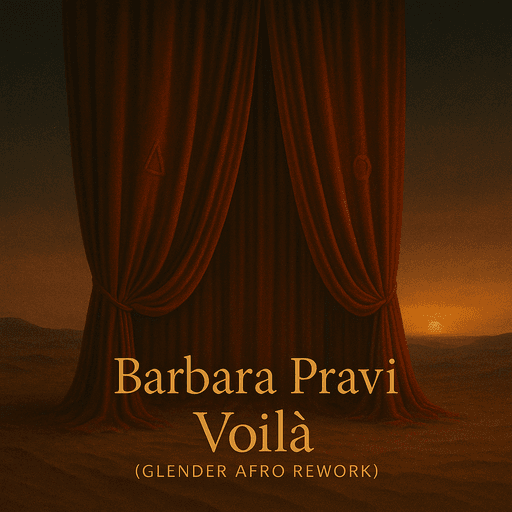
The Art of the Rework: Transforming Barbara Pravi’s “Voilà” into an Afro House Journey
Music, at its core, is a language of translation. It translates emotions into sound, experiences into melodies, and cultural moments into timeless memories. As a producer, my greatest passion lies not just in creating something new from scratch, but in taking something that already possesses a profound soul and translating it into a different sonic language.
This is the story behind my latest release: Barbara Pravi – Voilà (Glender Afro Rework).
It is a project that required more than just technical skill; it required a deep respect for the original masterpiece and a clear vision of how to transport a dramatic French ballad onto the sun-drenched dance floors of the Afro House scene.
The Source Material: Why “Voilà”?
To understand this rework, we must first appreciate the weight of the original song. When Barbara Pravi released “Voilà,” it wasn’t just a Eurovision entry; it was a cultural phenomenon. It revived the spirit of the great French Chanson, echoing legends like Edith Piaf and Jacques Brel.
The lyrics are a desperate, beautiful plea for connection. “Regardez-moi” (Look at me), “Écoutez-moi” (Listen to me). It is the sound of an artist stripping away all pretenses and standing naked before the audience, asking simply to be loved for who they are.
Musically, the original is theatrical. It creates a waltz-like atmosphere that feels intimate, almost like a small cabaret in Paris. It relies on varying tempos, dramatic pauses, and a crescendo that explodes with vocal power.
For a producer, this is both a dream and a nightmare. It is a dream because the raw material—the vocal—is perfect. It is a nightmare because the structure is the antithesis of electronic dance music. Dance music requires a steady pulse, a grid, a 4/4 time signature. “Voilà” flows like water; it speeds up and slows down with the singer’s heartbeat.
The Concept: A Clash of Cultures
My vision for the Glender Afro Rework was born from a question: What happens if we take this Parisian drama and place it in the middle of a vast, open landscape?
I wanted to strip away the cabaret walls and let the vocal breathe in the open air. I imagined the sun setting over a desert or a beach in Comporta or Tulum. I wanted to replace the orchestral strings with the earthy, grounding rhythms of Afro House.
Afro House and Organic House are genres that, much like the Blues or Fado, are rooted in feeling. They aren’t just about making people jump; they are about trance, hypnosis, and spiritual connection. By marrying the desperate emotion of Pravi’s vocals with the spiritual depth of African percussion, I aimed to create a track that serves a dual purpose: it is music for the body, but it is also music for the soul.
The Production Process: Bridging the Gap
Transforming a ballad into a club track is a delicate surgery. If you do too much, you lose the emotion. If you do too little, it sounds like a cheap overlay. Here is a look into my production process for this track.
1. Taming the Rhythm
The first challenge was the time signature. The original track has a sway that doesn’t naturally fit the strict 4/4 beat of House music. I had to meticulously warp and align the vocals, ensuring they sat perfectly on the grid without losing their natural, human feel. I didn’t want the vocals to sound robotic; they needed to float above the beat, maintaining that push-and-pull tension that makes the performance so gripping.
2. The Foundation: The Kick and Bass
In Afro House, the kick drum is the heartbeat. For this rework, I chose a kick that is soft, round, and deep. I avoided the punchy, aggressive kicks found in Tech House. This kick is meant to be felt in the chest rather than heard in the ears.
The bassline follows suit. It is a rolling, sub-bass groove that provides a warm blanket for the rest of the track. It doesn’t fight for attention; it anchors the song, giving the listener a sense of stability while the vocals soar into the higher registers.
3. Organic Textures
This is where the “Glender” signature comes in. To counter the electronic nature of the synthesizer, I layered the track with organic percussion. You will hear crisp shakers, wooden blocks, and subtle tribal drum hits. These elements provide the “dirt” and the texture. They make the track feel alive, as if it were being played by a band around a fire rather than programmed on a computer.
4. The “Drop” Philosophy
In mainstream EDM, the “drop” is usually a moment of maximum noise and energy. In Deep and Afro House, the drop is often a moment of release and minimalism.
When Barbara Pravi screams her iconic “Et Voilà!”, I made the conscious decision not to overwhelm her. Instead, I let the music open up. The beat locks in, the bass rolls deeper, and atmospheric pads swell in the background. It is a moment of pure vibe. It allows the listener to close their eyes and get lost in the rhythm, carrying the emotion of the scream into the dance.
Sophisticated Melancholy: The Vibe
There is a specific term in Portuguese culture that defines much of my inspiration: Saudade. It is a nostalgic longing, a happiness that is tinged with sadness. I believe this rework captures that feeling perfectly.
This is not a track for peak-hour festival madness with pyrotechnics. This is a track for the Golden Hour. It is designed for that magical time of day when the sun dips below the horizon, the air cools down, and the night begins.
I imagine this track being played in beach clubs in Mykonos, in desert camps in Morocco, or on a long, solitary drive along the coast of Portugal. It is sophisticated music. It respects the intelligence and emotional depth of the listener. It demands patience, and it rewards it with a journey.
Why a “Rework” and not just a Remix?
You might notice I label this a “Rework” rather than a standard remix. This distinction is important to me. A remix often implies using the original stems provided by the artist to create a variation. A rework, in the culture of underground electronic music, often implies a more bootleg, unauthorized, or completely transformative approach where the producer rebuilds the track from the ground up, often using only the vocal as the reference point.
It is an homage. It is my way of saying to the original artist: “You created something beautiful, and I love it so much that I want to show it to my world, in my language.”
The Final Result
The feedback I have received on this track has been overwhelming. It seems that the fusion of French passion and African rhythm resonates with people across borders. It proves that great music has no genre. A great melody is a great melody, whether it is played on an accordion in Paris or a synthesizer in a studio in Portugal.
I invited you to listen to “Voilà (Glender Afro Rework)” not just as a dance track, but as a piece of musical storytelling. Listen to how the percussion interacts with the breath of the vocals. Feel how the bassline supports the high notes.
This project was a labor of love, a technical challenge, and an artistic statement. I am proud to share it with you.
Experience the Track
You can listen to the full track on my YouTube channel, where I have curated a visualizer that matches the desert-sunset aesthetic of the sound.
And because I believe music should be shared and owned by those who love it, I am offering a Free High-Quality Download of this rework for my community. Add it to your DJ sets, your driving playlists, or your relaxation rotation.
Thank you for listening, supporting, and understanding the soul behind the beat.
Glender